What the camera shows
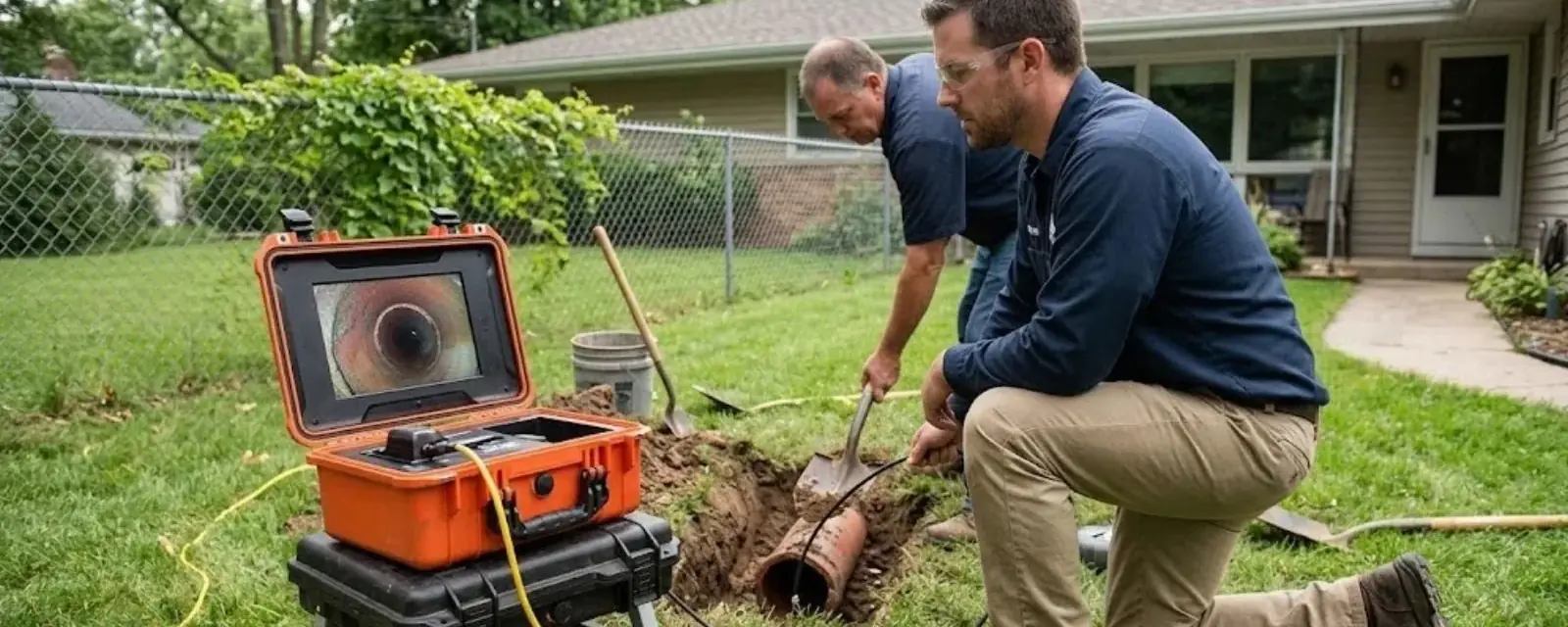
A flexible rod carries a camera and light through the cleanout. The picture appears on a screen as the camera moves, and a locator on the surface marks where each problem sits and how deep it is. We note joints, cracks, roots, scale, bellies and any change in pipe material.
You see the video as it plays and receive a copy. That removes guesswork when a repair is recommended, and it gives you something to show an insurer, a buyer or the city.
When a camera inspection is worth it
- You are buying a home with a lateral older than 25 years.
- A drain has been cleared more than once in a year.
- Your yard has a soft or sunken spot over the line.
- You want to verify a repair or a lining job.
- You are selling and want to know what a buyer may find.
What we look for and what it means
These are the usual findings and the next step for each.
| Finding | What it means | Usual next step |
|---|---|---|
| Roots at a joint | Gaps allow roots in | Root cutting, then repair if frequent, see sewer line repair |
| Grease buildup | Narrowed pipe from kitchen waste | Hydro jetting and habit change |
| Belly or sag | Pipe has settled and holds water | Monitor or replace the section |
| Crack or offset joint | Pipe is breaking or shifted | Spot repair or lining |
| Clear pipe | Line is in good shape | Keep the video for the record |
Buying or selling a Coppell home
A general home inspection normally does not run a camera through the sewer. Homes in Coppell were mostly built after 1974 and fully built out by about 2000, which puts the lateral at 25 to 50 years old. That is old enough for roots and joint wear to matter.
A camera inspection before closing gives you an honest picture and some negotiating room. If you are selling, a clean report saves a stressful surprise late in the deal.
How the clay soil figures in
Clay soil across the Dallas and Fort Worth region swells and shrinks, per the Dallas County Master Gardeners. Over the years that movement can offset joints and create bellies. The camera lets us see the effect and judge if it is minor or serious.
If we find a problem, we show it to you on the screen and explain the options. We do not recommend a repair that the footage does not support.
After the inspection
You get the video file and a plain-language summary of the findings, with the location of each and its depth from the cleanout. If the line is sound, you are done. If not, we explain the options and give a price before any work.
For lines with active clogs, see drain cleaning and the related service pages for the right fix.
How to prepare for an inspection
- Make sure the cleanout is easy to reach.
- Tell us about any past backups, repairs or roots.
- Avoid running water heavily just before the visit.
- Ask us to record the video so you can keep a copy.
- Have questions ready about anything the camera shows.
What affects inspection pricing
You get a price before we start.
Inspection is a maintenance and information cost and is not usually covered by insurance.
Sources and where to check
Where this comes from: the 25 to 50 year age range of many Coppell laterals follows published local history of the city's growth after the 1974 DFW Airport opening, and soil behavior is according to the Dallas County Master Gardeners. Ask the Coppell building department about permits for any repair the camera leads to.
Want to see inside your line?
Call to book a camera inspection in Coppell.
Sewer camera inspection questions from Coppell homeowners
No. The camera head is small, flexible and designed for pipe use. It slides through the cleanout and out again.
A typical home line takes under an hour once access is open. A clogged line needs cleaning first.
Yes, we provide a copy of the footage and a written summary of what we saw.
It can show cracks, offsets and standing water, and it helps find where the line is damaged. For clean water supply leaks, see leak detection instead.
Ready when you are
Call (817) 601-6266 to talk through sewer camera inspection with a licensed Coppell plumber.