Set the temperature with care
Many people set household hot water around 120 degrees Fahrenheit. Higher temperatures raise the scald risk, especially for children and older adults, and they speed scale buildup. Choose a setting that meets your needs and check the temperature at a tap with a thermometer.
Some units allow remote controls. Use them to set a lower temperature for daily use and a higher one only if you need it.
Understand flow rate
A tankless unit has a maximum flow at a set temperature rise. If you run too many fixtures at once, the water may turn lukewarm. That is not a defect, it is the limit of the unit. Count the fixtures you run at the same time, and consider staggering use.
- Run the dishwasher after the shower, not during it.
- Install low flow showerheads if you hit the limit.
- Ask about a second unit for large homes.
The cold water sandwich
A common complaint is a burst of cold water between two hot water uses. It happens when the unit shuts off between draws and restarts. Turning the tap off for a few seconds and then on again can cause it. Small adjustments to flow and recirculation settings can reduce it, and some models have a buffer tank.
Recirculation
A recirculation line or pump brings hot water to the taps faster. It uses a small amount of energy and can wear the pump. Use a timer or a smart control. If you add it, ask whether your model supports it and what the setup requires.
Service valves and the first flush
Service valves let a plumber flush the unit with a descaling solution. If your unit does not have them, ask to add them. A flush each year helps keep scale from reducing heat transfer. Hardness decides how often, and a home test strip helps you decide.
| Task | How often | Why |
|---|---|---|
| Check the temperature | At setup, then after any change | Safety and comfort |
| Clean inlet filter screen | Yearly or as needed | Keeps flow strong |
| Flush the heat exchanger | Yearly, more often with hard water | Removes scale |
| Inspect vent and condensate drain | Yearly | Prevents blockages |
| Check error codes | When they appear | Early warning |
When to call for service
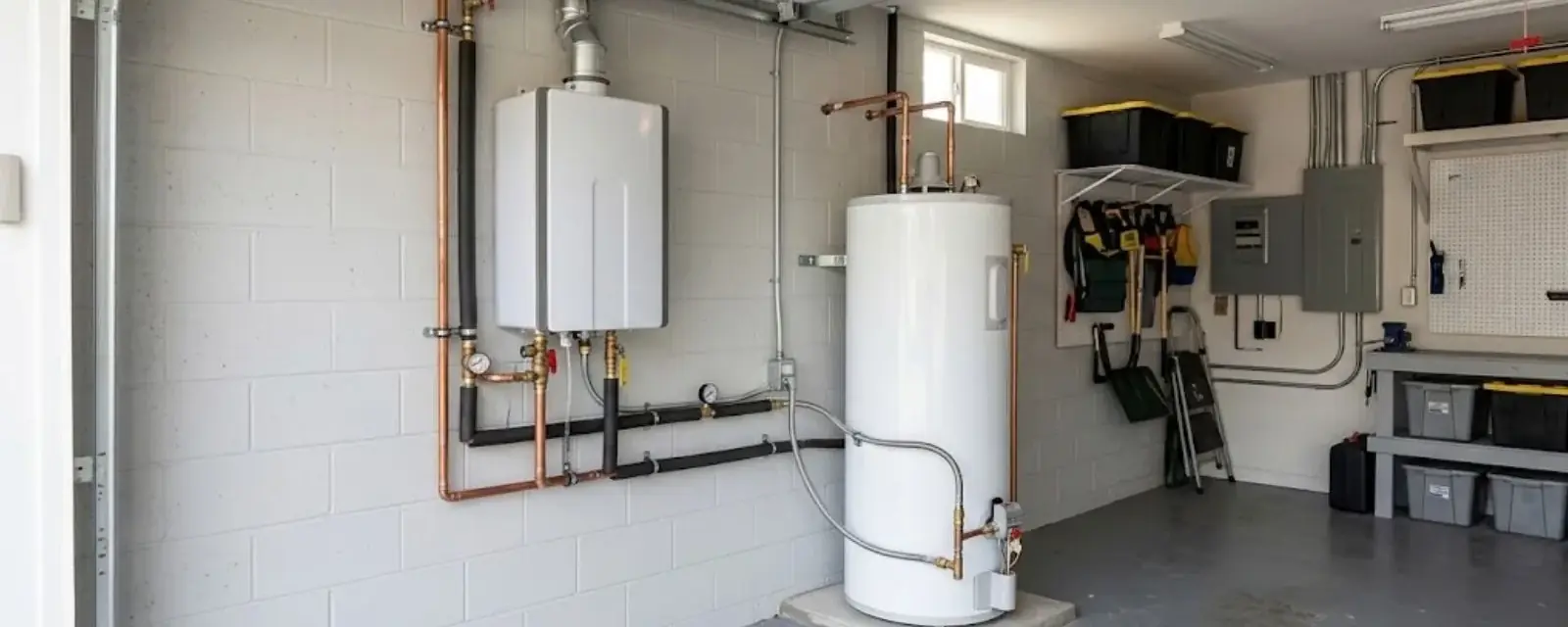
If the unit shows an error code, shuts off, makes a boiling sound or gives weak flow, call a plumber. See tankless water heater for service and water heater repair for faults.
Reading error codes without guessing
Most tankless units display a code when something is wrong. Codes point to a category, such as ignition, flow, venting or sensor trouble. Write down the code and the brand before you call. A plumber can often tell you the likely cause over the phone, and it speeds the visit.
Do not reset a unit again and again. A repeated code means the cause is still there. Resetting once after a power blip is fine. Resetting ten times is not.
A first-year care calendar
A calendar makes the routine automatic, and it keeps the warranty paperwork in order.
- Month one: check the temperature at a tap with a thermometer.
- Month three: look at the vent and the condensate drain.
- Month six: clean the inlet filter screen.
- Month twelve: flush the heat exchanger with a descaling solution.
- Every year: note any change in flow or sound.
Setting up for kitchens, baths and the far end of the house
Where the unit sits changes how long you wait for hot water. A tankless heater does not store hot water, so the wait at a faucet depends on the pipe length between the unit and the tap. A faucet far from the heater can take a while to run hot, and the water in the line cools between uses. That is a pipe issue, not a heater fault.
Options include a recirculation loop, a small point-of-use unit near a distant sink or simply accepting a longer wait at the far bathroom. Tell your plumber which faucet bothers you most, because the best fix depends on the layout. A short test with a thermometer and a stopwatch tells you how long the wait really is before you spend money.
Coppell notes for tankless care
Coppell's water quality report lists an average total chlorine residual of 3.10 parts per million and does not list hardness. A home test strip gives your own number, and that sets your flush schedule.
Ask the Coppell building department whether a permit is needed for a tankless install or replacement. If you live in Irving or Lewisville, use that city's own office.
Sources: the chlorine residual is according to the City of Coppell 2025 water quality report. Temperature and flush guidelines follow the unit maker's manual.
Want a plumber to look at it?
Call (817) 601-6266. Our 24/7 line is answered by a Coppell dispatcher.
Questions Coppell homeowners ask
Many households choose about 120 degrees Fahrenheit. Check with a thermometer and adjust for your needs and safety.
The unit can shut off between short draws and then restart. Adjusting flow and settings can reduce it.
Test your tap water hardness and flush at least yearly. Heavy scale or error codes mean sooner.