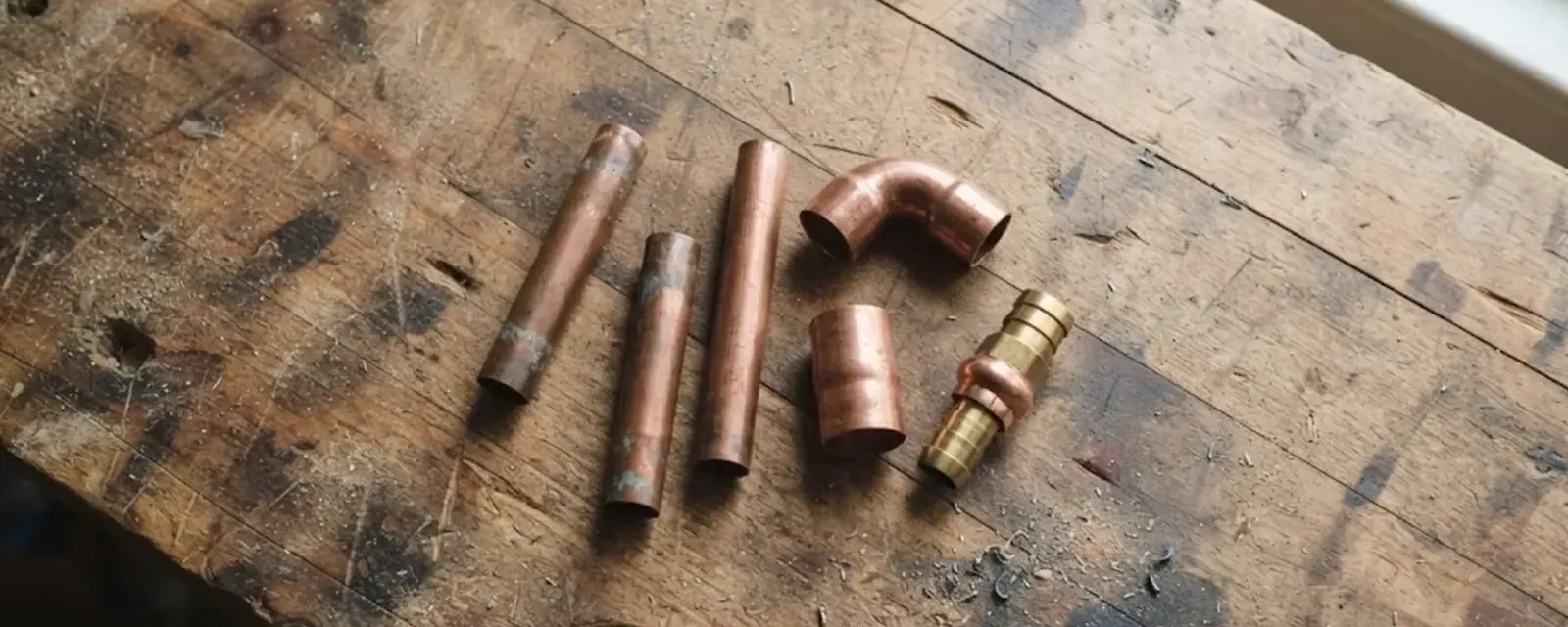
Know what kind of line you are working on
PVC is used for drain, waste and vent lines in many homes. Copper is used for hot and cold water supply and sometimes for drain lines. Cold water lines may be PVC outdoors on a sprinkler system. Hot water lines should not be PVC. The fitting you need depends on the use, and some uses are not allowed by code.
If you are not sure which line it is, trace it. A line coming off the water heater is hot water. A line leading to a drain is waste.
Common ways to join the two
The most common methods use a fitting that has a different connection on each side.
| Method | How it works | Notes |
|---|---|---|
| Threaded adapters | A PVC male adapter threads into a copper female adapter | Use thread sealant on tapered threads |
| Push-to-connect fitting | A fitting grips copper and plastic with a seal | Fast, and rated for specific pipes |
| Rubber coupling with clamps | A flexible sleeve clamps each pipe | Common for drain lines |
| Transition union | A union with a dielectric barrier | Separates metals |
| Compression fitting | A nut and ferrule seal around the pipe | Works for some sizes |
Pipe sizes: the part that confuses everyone
Copper and PVC have different outside diameters for the same nominal size. A three quarter inch copper pipe does not match a three quarter inch PVC pipe in diameter. That is why a fitting made for the pair is needed. Check the fitting label to confirm both sizes.
A basic drain line connection
This works for a straight drain connection between two different materials. It is not for pressurized water.
- Cut the pipe square and deburr the edges.
- Slide a rubber coupling with stainless clamps over the end.
- Push the second pipe into the other side.
- Tighten the clamps evenly.
- Run water and check for leaks.
Why metals and plastics need care
Copper and some other metals can corrode where they touch certain materials. A dielectric fitting separates them. If you connect copper to galvanized steel, use a dielectric union. Plastic and copper touching does not create galvanic corrosion, but heat from soldering near plastic can damage the plastic. Keep soldering away from PVC fittings.
When to hire a plumber
If the line is pressurized, if it is inside a wall or if you are not sure what code allows, hire a licensed plumber. A leak in a pressurized joint can flood a room. See plumbing installation and repiping for how we handle larger changes.
Tools and materials checklist
Gather everything before you shut off the water so the house is not without service longer than needed.
- Pipe cutter that fits copper, plus a fine saw or plastic cutter for PVC.
- Deburring tool or sandpaper for the cut edges.
- The transition fitting rated for your pipe sizes and use.
- Thread sealant rated for the fitting material.
- Rags, a bucket and a way to shut off the water.
Testing the connection
After you make the joint, turn the water on slowly and look at the fitting for several minutes. Then check again after an hour and the next morning. A slow drip often appears after pressure has been on for a while. Dry the fitting with a rag so any new moisture shows up clearly.
If the joint is on a drain line, run water for a minute and watch the connection. A rubber coupling should not weep. If it does, loosen the clamps, reseat the pipe and tighten them evenly.
Real-world cases where the two materials meet
The most common place a homeowner meets this question is a sprinkler or hose bib repair, where an old copper stub needs to connect to a plastic line. The second is a drain repair, where a copper trap arm or a cast iron stub joins a plastic pipe. The third is a water softener or filter, where plastic bypass valves meet copper supply pipe.
In each case, the fitting depends on pressure, temperature and whether the line is buried or visible. A pressurized line outdoors needs a fitting rated for burial and freeze exposure. A drain connection indoors usually uses a shielded rubber coupling. A hot line needs a metal or hot-rated fitting. If you cannot tell which case you have, a photo sent to a plumber, or a quick visit, is cheaper than a flooded garage.
Coppell notes on code and permits
Which fittings are allowed depends on the code the city has adopted. Ask the Coppell building department about your project and about permits, since some plumbing work needs one. The Texas State Board of Plumbing Examiners lets you check a plumber's license by Responsible Master Plumber number.
Homes in Coppell range from the 1980s to newer builds, so you may find mixed materials from past repairs. If you live near Irving or Carrollton, the same fitting rules apply.
Sources: fitting ratings follow the maker's guidelines. According to the Texas State Board of Plumbing Examiners, you can verify a plumber on its public search, and code questions go to the Coppell building department.
Want a plumber to look at it?
Call (817) 601-6266. Our 24/7 line is answered by a Coppell dispatcher.
Questions Coppell homeowners ask
No. PVC cement only bonds plastic. Use a transition fitting made for the pair.
Standard PVC is not rated for hot water. Use a material rated for it, and ask a plumber.
Use the Texas State Board of Plumbing Examiners public license search with the Responsible Master Plumber number.